 +62 8133 8157 297
Corporate Criminal Liability and the Responsibility of Directors
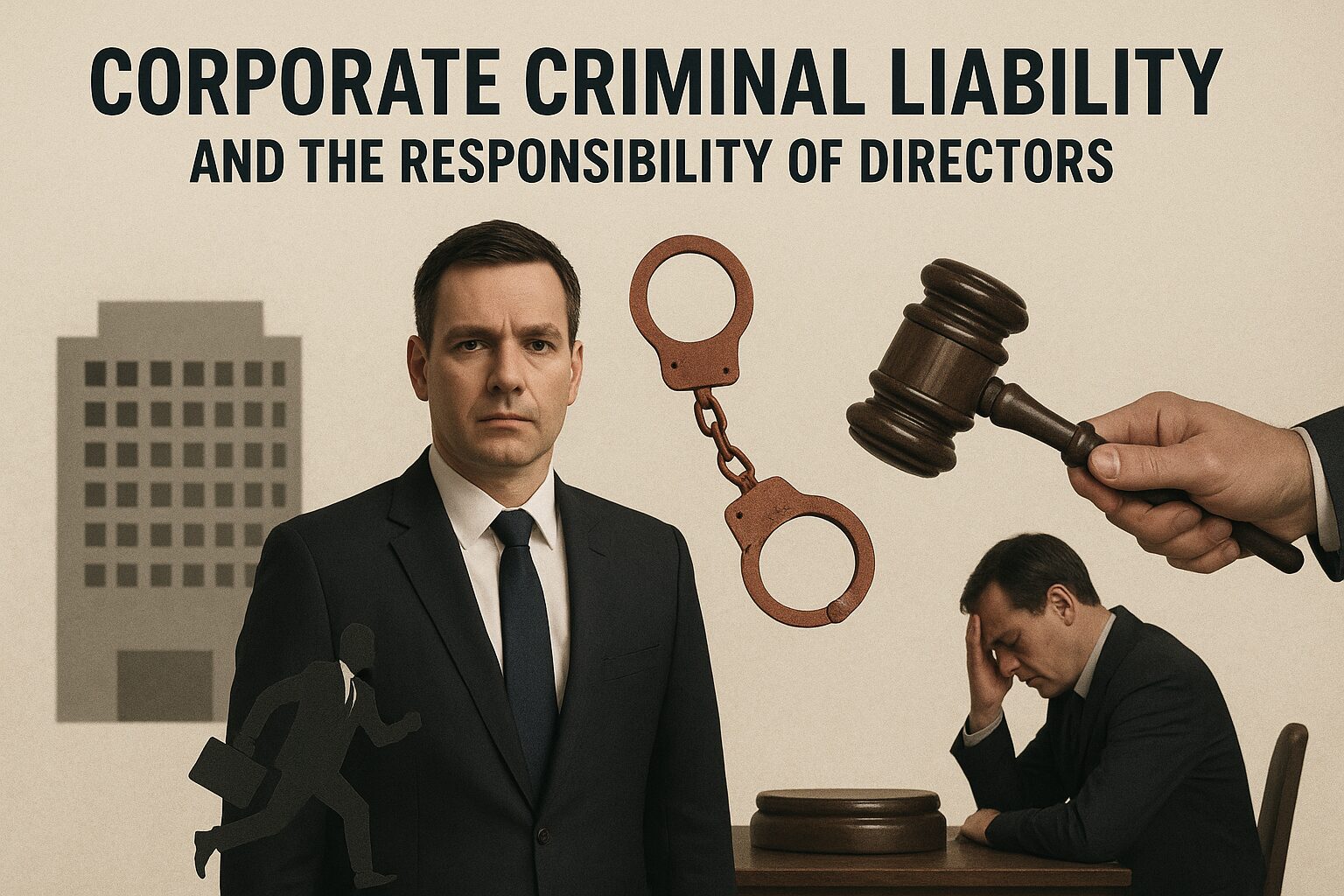
Along with the rapid development of business activities and the increasing complexity of corporate structures, the legal approach toward corporations has also evolved. Corporations are a product of modernization that facilitate the fulfillment of societal needs and make significant contributions to the economy, including through state revenue.
Companies are no longer viewed merely as legal subjects bearing civil liability such as breach of contract or compensation. Today, corporations are recognized as entities capable of committing or benefiting from criminal acts in the course of their business activities. This recognition is reflected in various laws and regulations that affirm that corporations may be held criminally liable when their actions or business policies cause social harm, threaten public safety, or cause losses to state finances.
This paradigm shift underscores that corporations and their decision-makers must conduct business with due diligence, compliance, and social responsibility. Without strong internal oversight and business ethics, the risk of criminal liability can not only damage a company’s reputation but also threaten the personal freedom of its management.
Who Is Responsible?
A company may be held criminally liable when a criminal act is committed within the scope of its business activities and provides benefits or is intended for the interests of the corporation. Under Indonesian corporate criminal law, the subjects that may bear liability include:
- The Corporation
As a legal entity, a corporation may be subjected to criminal sanctions in the form of fines, asset or profit confiscation, suspension of business activities, revocation of licenses, or even dissolution. - Directors or Management
Directors, commissioners, or management may be personally liable if they:- knew or should have known about the criminal act,
- ordered, permitted, or participated in the act, or
- failed to conduct proper supervision, thereby allowing the criminal act to occur.
- Employees or Third Parties
Liability may also extend to employees or third parties acting for or on behalf of the company. If their actions provide benefits to the company, the corporation cannot escape responsibility, even if the perpetrator is an external party.
Why Is Compliance Important?
Companies are required not only to comply with the law formally but also to demonstrate a genuine commitment to preventing criminal acts within their business environment. Several preventive instruments that must be implemented include:
- Anti-fraud and anti-corruption policies to ensure lawful decision-making.
- A whistleblowing system to detect potential violations early.
- Continuous internal audits to identify oversight weaknesses.
- Compliance training for all employees to build shared awareness.
- Due diligence on business partners to avoid involvement in crimes committed by others..
- Transparent documentation of directors’ decisions so that all managerial actions can be accounted for.
Effective compliance implementation not only prevents violations but can also serve as a basis for defense if the company faces criminal charges. Policy documents, training records, and internal audit findings can demonstrate that directors exercised due diligence and did not allow wrongdoing.
The expansion of corporate criminal liability reflects increasing legal scrutiny of business activities. This mirrors public demands for business practices that not only pursue profit but also uphold integrity, safety, and public interest. Companies that manage legal risks well are not only protected from potential criminal sanctions but also gain greater trust from stakeholders. Commitment to compliance is a long-term investment for building a sustainable and competitive business.
Author:
Ni Putu Ayu Mandalay Shasa Alba Chiara, S.H.
Editor:
Anak Agung Made Shintya Dewi
Advisory Board:
I Wayan Sudarsana, S.H.
Anak Agung Alit Juliarta, S.Pd., S.I.Kom., M.Par.
References:
Prakasa, Ragil Surya, dkk., 2023, Sistem Pertanggungjawaban Pidana Korporasi Di Indonesia,
Jurnal Hukum dan Hukum Islam, Universitas Muhammadiyah Sumatera Barat, Sumatera Barat.
Saputra, Fahreyz Reza Saputra, Hafrida, dan Herry Liyus, 2025, Pertanggungjawaban Pidana
Korporasi Dalam Tindak Pidana Kepabeanan Di Indonesia, Jurnal Supremasi, Volume 15, Nomor 1, Universitas Jambi, Jambi.
Sirait, Romauli, dkk., 2022, Corporate Criminal Liability in the Indonesian Criminal Law
System, Budapest International Research and Critics Institute-Journal, Universitas Airlangga, Surabaya.